
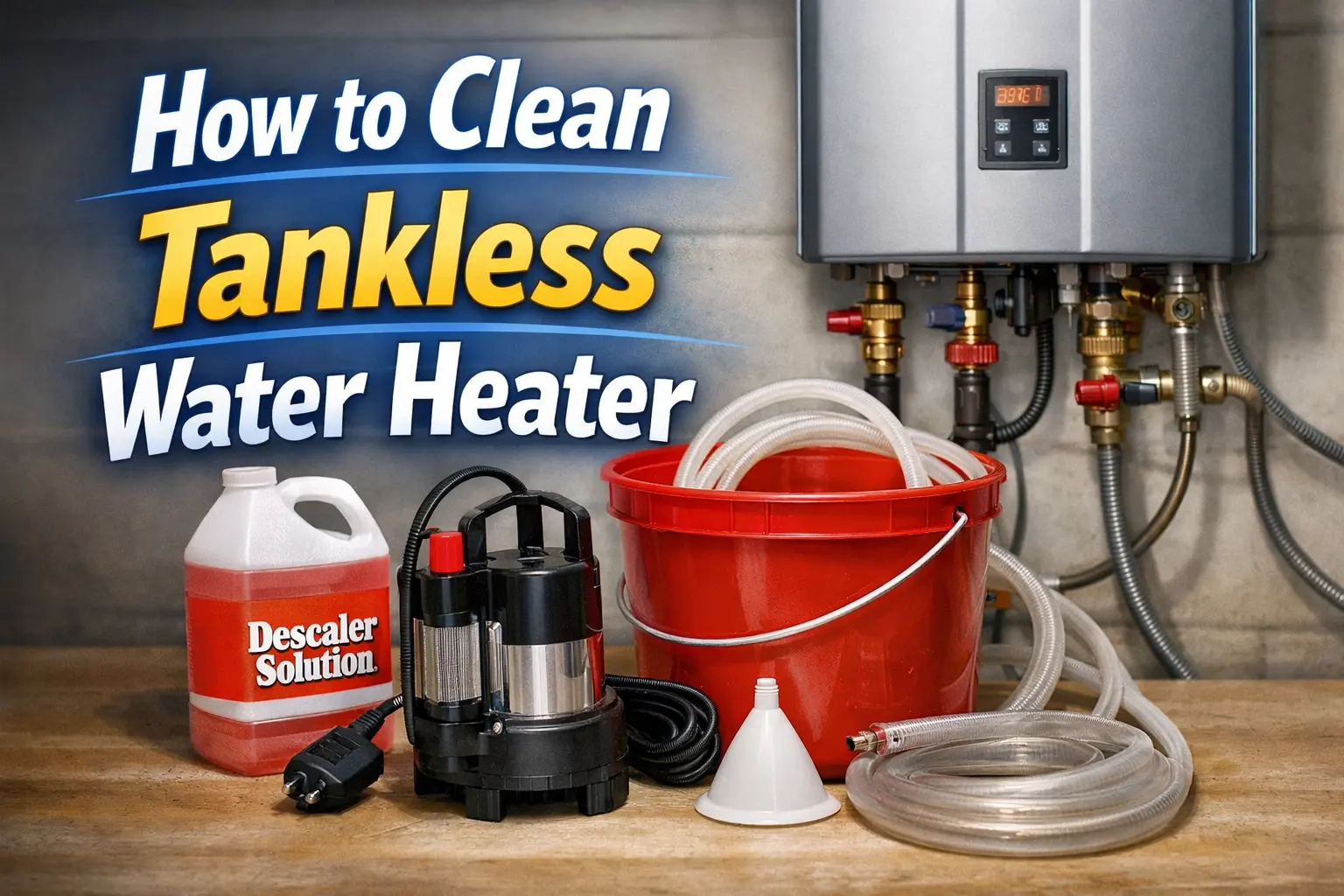

Tankless water heaters deliver hot water on demand and usually last longer than traditional tank systems. However, mineral buildup inside the heat exchanger slowly reduces performance. Many homeowners ignore this maintenance step until hot water problems start appearing.
Learning how to clean a tankless water heater helps maintain strong water flow, stable temperatures, and efficient heating. Regular cleaning removes mineral deposits and keeps the system working the way it should.
Why Tankless Water Heater Cleaning Is Important
Minerals inside the water supply slowly build up inside the heat exchanger. This buildup is called scale. Homes located in hard water areas experience this problem faster.
Scale blocks water passages and forces the heater to work harder. As a result, efficiency drops and energy usage increases. The unit may also struggle to maintain consistent hot water.
Over time, mineral buildup can damage internal components. Regular cleaning removes deposits before they cause serious problems. Proper maintenance also helps extend the lifespan of the unit and reduces repair costs.
How Often Should a Tankless Water Heater Be Cleaned
Most manufacturers recommend cleaning the system once a year. This schedule works well for homes with normal water quality.
However, homes located in hard water areas may need cleaning every 6 to 9 months. Hard water contains higher levels of calcium and magnesium, which create faster scale buildup.
Regular flushing prevents thick deposits from forming inside the heat exchanger. Consistent maintenance keeps the heater efficient and reduces the chances of breakdowns.
Signs Your Tankless Water Heater Needs Cleaning
Several warning signs appear when mineral buildup starts affecting the system.
Reduced Hot Water Flow
Mineral deposits restrict water movement through the heat exchanger. As a result, hot water pressure becomes weaker at faucets and showers.
Fluctuating Water Temperature
Scale buildup interferes with the heating process. The water temperature may suddenly turn hot and then cold during use.
Error Codes on the Unit
Modern tankless heaters display error codes when internal sensors detect problems. Some of these codes appear when scale buildup blocks water flow.
Longer Time to Heat Water
A clean unit heats water quickly. When scale forms inside the system, the heater requires more time and energy to reach the desired temperature.
Tools and Materials Needed to Clean a Tankless Water Heater
Before starting the cleaning process, gather the required tools.
Submersible Pump
A small pump circulates vinegar or descaling solution through the heater. This circulation breaks down mineral deposits inside the system.
Two Washing Machine Hoses
These hoses connect the pump, bucket, and service valves on the heater.
Bucket
A five-gallon bucket holds the cleaning solution while it circulates through the system.
White Vinegar or Descaling Solution
White vinegar works well for dissolving mineral buildup. Some plumbers prefer commercial descaling solutions designed for tankless heaters.
Screwdriver
A screwdriver helps remove the access panel and open service ports.
How to Clean Tankless Water Heater: Step-by-Step Guide
Cleaning a tankless water heater involves circulating vinegar through the heat exchanger to remove mineral deposits.
Step 1: Turn Off the Power and Gas Supply
First, shut off the power supply to the heater. Electric units should be turned off at the breaker panel. Gas units require shutting off the gas valve.
This step prevents the system from operating during the cleaning process.
Step 2: Shut Off the Water Valves
Close both the cold water inlet valve and the hot water outlet valve. These valves isolate the heater from the home’s plumbing system.
Next, open the service valves on the unit.
Step 3: Connect the Hoses and Pump
Attach one washing machine hose to the cold water service port. Connect the other hose to the hot water service port.
Place the submersible pump inside the bucket and connect the hose from the cold service port to the pump.
The hot water hose should return back into the bucket.
Step 4: Circulate Vinegar Through the System
Fill the bucket with white vinegar or descaling solution.
Turn on the pump and allow the liquid to circulate through the heater. Most plumbers allow the solution to circulate for 45 to 60 minutes.
During this time, the vinegar breaks down mineral deposits inside the heat exchanger.
Step 5: Flush the System with Clean Water
After descaling is complete, turn off the pump and remove the vinegar solution.
Disconnect the hoses and open the cold water valve. Allow clean water to flush through the system for several minutes.
This step removes any remaining cleaning solution.
Step 6: Restart the Water Heater
Close the service valves and reconnect the plumbing lines.
Turn the gas and power supply back on. Once the system starts, check the unit to confirm proper operation.
Common Mistakes to Avoid When Cleaning a Tankless Water Heater
Several mistakes can damage the system during maintenance.
Some homeowners skip the power shut-off step. This can cause the heater to activate while cleaning is in progress.
Using harsh chemicals also creates problems. Strong acids may damage internal components.
Another common mistake involves skipping regular maintenance. Waiting too long allows thick mineral deposits to form inside the heat exchanger. Heavy buildup becomes much harder to remove.
When to Call a Professional Plumber
Some situations require professional help.
If the heater continues showing error codes after cleaning, a deeper internal issue may exist. Professional inspection can identify sensor or component failures.
Heavy mineral buildup may also require professional equipment to remove. In these cases, plumbers use specialized pumps and stronger descaling solutions.
Homeowners who feel unsure about disconnecting valves or hoses should also consider professional service.
Tips to Keep Your Tankless Water Heater Running Efficiently
A few simple steps help maintain long-term performance.
Install a water softener if your home has hard water. This device reduces mineral content and slows scale buildup.
Regularly inspect the unit for leaks or error codes. Early detection prevents major repairs.
Most importantly, schedule annual flushing to remove mineral deposits before they affect performance.
Proper maintenance keeps the heater efficient and extends its service life.
Frequently Asked Questions
Can vinegar damage a tankless water heater?
White vinegar is widely used for descaling tankless water heaters. It removes mineral buildup without damaging internal components when used properly.
How long does it take to clean a tankless water heater?
Most cleaning processes take 60 to 90 minutes. This includes setup, circulation of vinegar, and flushing the system with clean water.
Can you clean a tankless water heater without a pump?
A pump is strongly recommended. It allows the cleaning solution to circulate through the heat exchanger and dissolve mineral deposits effectively.
What happens if a tankless water heater is not flushed?
Mineral deposits continue building inside the heat exchanger. Over time, the heater loses efficiency, produces inconsistent hot water, and may eventually fail.
Professional Tankless Water Heater Service in Littleton
Cleaning a tankless water heater helps remove mineral buildup and restore performance. However, some units develop deeper issues that require professional service. Error codes, restricted heat exchangers, or damaged components often need proper inspection.
For homeowners who need tankless water heater repair in Littleton, experienced plumbers can inspect the system and safely flush the unit using professional equipment. A technician can also check valves, sensors, and the heat exchanger to ensure the heater runs efficiently.
Balkan Plumbing Littleton provides professional service for tankless water heaters, including system flushing, maintenance, and repairs. Proper servicing helps extend the life of the unit and prevents future hot water problems.
https://shorturl.fm/fcBGW
https://shorturl.fm/jZSM7
https://shorturl.fm/yc8xi
https://shorturl.fm/1BAty
https://shorturl.fm/ZGesN
https://shorturl.fm/aKOFx
https://shorturl.fm/A2HiF